GREENING PROBLEMS IN YELLOW SQUASH AND ZUCCHINI
02 Dec 2025
Most squash growers have at some stage experienced problems with greening or spotting in yellow squash or zucchini varieties.
There are two main reasons: plant stress and virus.
Breeding Background and Plant Stress Effects:
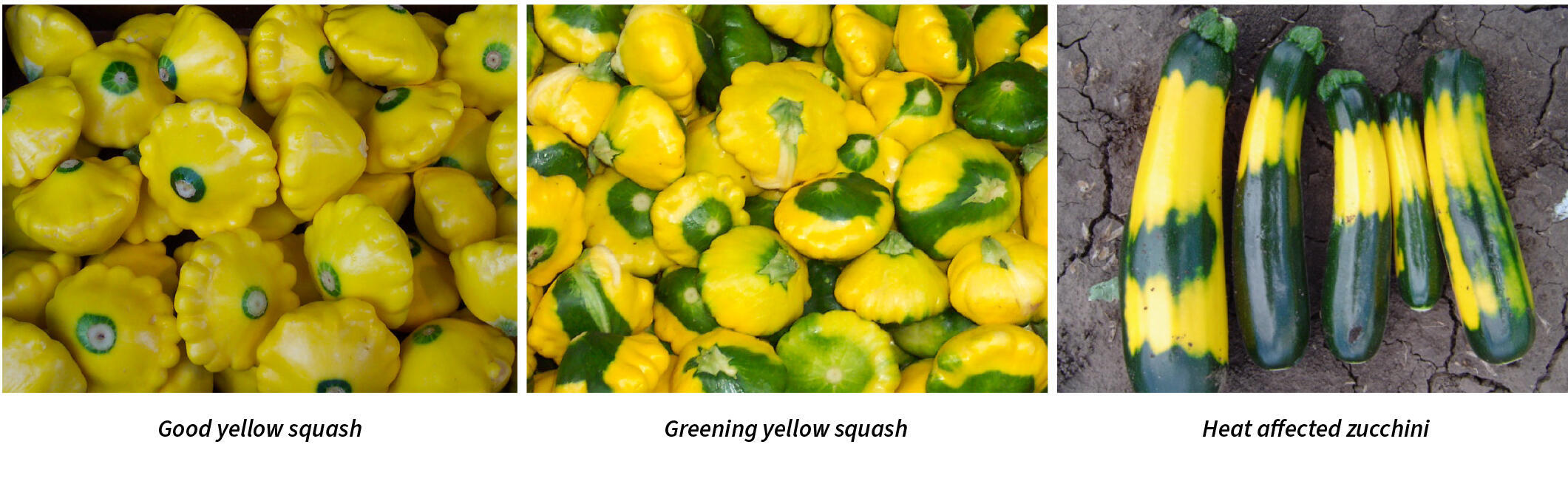
A hybrid is a cross of two parent lines, these parents can be relatively similar or distinctly different, depending on the hybrid characteristics the plant breeder requires. The parental lines for yellow squash are very different, one parent is yellow, the other is a solid green colour. The gene responsible for the yellow colour is the dominant gene, which is why yellow squash are mostly yellow in colour. The issue comes under periods of high stress (usually hot weather, can also be nutritional stress, drought or disease pressure) when the dominant yellow gene can break down, resulting in green or mottled green and yellow fruit. If these stresses can be removed, the plant will begin to produce yellow fruit once again.
Virus Effect:
ZYMV (Zucchini Yellow Mosaic Virus) is also one of the major causes of greening in squash and other cucurbits, particularly in the Southern growing regions in Australia, or in Western Australia. PRSV (Papaya Ringspot Virus) is the predominant virus in Queensland growing regions.
The main difference between greening from virus and greening from heat, is that the virus will affect yield as well as fruit appearance. Fruit will tend to have a glassy clear appearance and show a more regular green and yellow circular pattern giving a spotted effect. Virus affected fruit may also tend to have a lumpy uneven appearance. Virus affected plants will have leaves that are mottled in appearance and in extreme cases can have leaves with a bubbled look to them. Virus may strike early, affecting even first crop harvests, leaving growers to mistakenly think they have received the wrong variety.
Experience has shown that the same seed lots sown in a range of areas can show dramatically different effects. In virus prone areas, a seed lot may experience significant greening problems. The same seed lot sown in an isolated area without virus pressure and mild conditions, however, will produce normal high quality yellow squash.
Heavy aphid infestations can be devastating, good crop practices can help to reduce potential problems. Some of the latest research indicates that virus is spread more so now by mechanical means rather than insect transmission. If you harvest with a knife, please ask the harvest crew to clean and disinfect the picking knives regularly, and to try not to harvest fruit off infected plants. Many growers will now refrain from asking the harvest crew to remove infected plants from the field for fear of spreading the virus through sap transmission. The best advice, however is to avoid growing at the time when virus can be problematic.
The information provided is based on an average of data and observations collected from our trials. Significant variations may occur in the performance due to a range of conditions including cultural/management practices, climate, soil type and geographic location. As a consequence South Pacific Seeds cannot accept any liability as to the accuracy of this information. MAY 2022. ACN 002 887 256
Share:


